Special Extension Course Series: International Voices
International Voices Course Two - Sergio Benvenuto: For Psychoanalysis, Does Psychopathology Exist?
INTERNATIONAL VOICES
Online Course
Course Leader: Sergio Benvenuto
Course Coordinator: Alireza Taheri, PhD, RP
Saturday, 9:30 am – 11:30 am: February 6, 13, 20, 27, 2027 (4 sessions)
Fees: $300
Deadline for registration is January 30, 2027.
Preregistration is required.
** DISTANCE PARTICIPATION ONLY – This course will be conducted online.
In this stimulating course, the great Italian psychoanalytic thinker Sergio Benvenuto takes on the psychotic, the perverse, bipolarity to query the notion of psychopathology in psychoanalytic theory and practice.
Class 1:
Sergio Benvenuto holds that “psychopathology,” according to the psychoanalytic model, should in fact be written in quotation marks, because psychoanalysis ultimately does not believe in the “pathological.” In other words, the original vocation of psychoanalysis is anti-psychiatric, in the sense already affirmed by Thomas Szasz. Not surprisingly, Freud’s foundational works of psychoanalytic doctrine deal with dreams, hysterical symptoms, slips of the tongue, jokes, and then obsessive, paranoid, and homosexual experiences, and more generally certain particular aspects of love life. That is, it places “normal” experiences and “pathological” experiences on the same level. This led Lacan and others to present psychoanalysis not as a theory of the pathological, but as a theory of subjective structures—arising from different types of negation.
Class 2: Psychosis
The teacher revisits the Lacanian tripartite structure—neurosis, perversions, and psychoses—focusing here on psychoses. In particular, on paranoia, since there is no fully developed psychoanalytic theory of schizophrenia. He analyzes the Freudian-Lacanian concept of Verwerfung (foreclosure) as the form of negation that generates psychoses, and outlines the strengths and limitations of the Lacanian approach.
Class 3: For psychoanalysis, do perversions exist?
The teacher returns to the issue from the first lecture—the one on the “psychopathological”—to revisit the question of what sexual perversion (today called paraphilias) is for psychoanalysis. He engages with some more or less “militant” contemporary approaches that seek to legitimize many sexual behaviors once labeled as perverse, presenting them as legitimate expressions of libido. He briefly traces the evolution of analytic theory on perversions, arriving at original conclusions: perversions are, for the most part, a particular way of adjusting male libido to the woman. He analyzes the Lacanian thesis according to which, in perversion above all, it is the desire of the Other that is satisfied.
Class 4: Bipolarity
Here the teacher engages with a form-of-being (not a pathology, therefore) on which Lacanians, including Lacan himself, have rarely spoken. He analyzes the success of Freud’s theory of melancholy–mania in its producing Self psychology. The teacher structurally separates bipolarity from psychoses and attempts to redefine it in relation not to sexuality but to the “will to power.” He proposes a reconsideration of the structure of Aristotelian “virtues,” showing their relevance for understanding the oscillating life of the bipolar subject.
Learning Objectives:
By the end of the course, participants will be able:
- To understand what the psychoanalytic approach consists of with respect to a range of “subjective structures” that psychoanalysis has taken up from 20th-century psychiatric diagnostics.
- To understand how Freud, and psychoanalysis in the Freudian wake, have explained and continue to explain psychosis, particularly paranoia—especially in light of Lacan’s later teaching.
- To grasp the problematic nature of the notion of “perversion” or “paraphilia,” and how today it is important to consider sexual behaviors in general—not only perverse ones—using psychoanalytic tools.
- To understand, in particular, bipolarity—once called manic-depressive psychosis—as a syndrome connected to a specific form of life inspired by the “will to power.”
- More generally, participants will be able to improve their understanding of psychotic, perverse, and bipolar subjects, thereby enhancing the quality of their psychotherapeutic or psychoanalytic interventions.
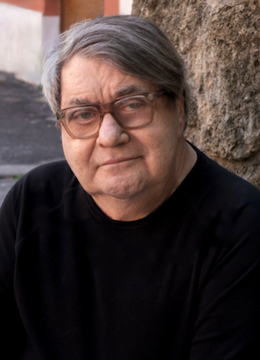
Sergio Benvenuto
Sergio Benvenuto is a psychoanalyst and philosopher. He studied psychoanalysis at the University Paris 7. He teaches psychoanalysis at the institute Pulsion in New York. He is retired researcher at the National Council for Scientific Research in Italy. He is the president of Institute Elvio Fachinelli in Italy. He was the founder and the editor of European Journal of Psychoanalysis, and he is member of the Editorial Board of American Imago and Philosophy World Democracy.
He has worked on Freud, Lacan, and Monotheisms (with J.-L. Nancy).
His publications in English include: with A. Molino, In Freud’s Tracks (Aronson, 2008). What Are Perversions? (Karnac, 2016). Conversations with Lacan (Routledge, 2020). Lacan, Kris and the Psychoanalytic Legacy: The Brain Eater (Routledge, 2023). Papers in the book Coronavirus, Psychoanalysis, and Philosophy, edited by F. Castrillón & T. Marchevsky (Routledge, 2021). And many other papers in various journals in many languages.
Alireza Taheri, PhD, RP
Alireza Taheri, PhD, RP, holds a PhD from the University of Cambridge. He is a psychoanalyst and clinical supervisor in Toronto. He teaches at the psychoanalytic theory and practice at the Toronto Psychoanalytic Institute and Society as well as Persepolis Psychoanalytic (Iran) and the Boston Graduate School of Psychoanalysis where is a faculty member. He writes on philosophy, psychoanalysis, film and literature. Alireza has published a monograph entitled Hegelian-Lacanian Variations on Late Modernity: Spectre of Madness where he develops a novel dialectical theory based on Hegel, Lacan and Žižek. His current research focuses on Lacanian theories of psychosis and autism about which he is preparing a monograph. Member TPS&I.
This event is eligible for Section 1 CME credits (0.5 credits/hour). This event is an accredited group learning activity (section 1) as defined by the Maintenance of Certificate Program of the Royal College of Physicians and Surgeons of Canada, approved by the Canadian Psychiatric Association (CPA). The specific opinions and content of this event are not necessarily those of the CPA, and are the responsibility of the organizer(s) alone. As per the Royal College standard, each presentation provides a minimum of 25% interactive learning.
Full-time students in universities and colleges, and full-time mental-health trainees are eligible for a 25% reduction in course fees. Proof of 2026/2027 status needs to be provided. Please contact the tps&i directly to register at a discount.
Refunds must be requested in writing two weeks prior to the beginning of a course. A handling fee of $50 will be retained. After these two weeks, fees cannot be returned.
For more information about and for registration in the tps&i Extension Programs, Scientific Meetings, Training Programs, Study and Supervision groups and Special Presentations, please visit our website: torontopsychoanalysis.com or email info@torontopsychoanalysis.com