
SCIENTIFIC MEETING - Protracted Success Neurosis: “Conversations on the Plurality of Worlds”

SCIENTIFIC PROGRAM
Hybrid Meeting
Presenter: Edward S. Hamer, MD, FRCP(C)
Discussant: Joseph Fernando, MD
Saturday, February 13, 2027: 10:00 am – 12:00 pm (No break)
TPS Scientific Meeting: Open to All (*Fee may apply. See below.)
Deadline for RSVP/registration is one week prior to the meeting.
Preregistration is required.
** HYBRID MEETING: Offered via Zoom or in person. In person registration is limited to 50 participants.
* RSVP/Registration
CPS members, TPS Affiliate/Guests or TIP Candidates – Please RSVP by email to info@torontopsychoanalysis.com.
Please note that there is a $45 fee for participants who are NOT CPS members, TPS Affiliate/Guests or TIP Candidates. Please register online.
‘Success neurosis’ was originally coined by Lorand in 1950. It followed upon Freud’s (1916) paper, “Those wrecked by success” in which a person who had reached a pinnacle of success in a field would fall inexplicably into a pit of guilt and self-punishment. It wasn’t until his 1936 paper “A Disturbance of Memory on the Acropolis” that the explanation for the fall occurred to Freud. By visiting the acropolis in Athens, he had seen first hand a sight that he had studied and his businessman father had never known. His oedipal triumph was the cause of his neurosis. Since then pre-oedipal determinants and success neurosis have been studied; namely, separation guilt (Modell, 1965), self-defeating behaviour in moral masochistic characters (Menaker, 1953; Berliner, 1942), loss of mother’s love (Levy, S. et al., 1995; Marill, S. H. et al., 2004), narcissistic factors (Segal, 1983; Blum 1973), as well as oneness and twoness differentiation (Ogden, 1992, 1994). In this paper, Freud, Klein, Fairbairn and Ogden’s theories will be used within the framework of Pine’s (1990, 1998) four “psychologies” to understand the “worlds” that lead to a protracted success neurosis. The treatment requires the analyst to scan the field of the different psychopathological levels in order to apply timely and appropriate interventions for optimal mutative change. Two cases will be used to illustrate.
Keywords: Protracted success neurosis, separation guilt, masochism and narcissism, oneness and twoness
Learning Objectives:
At the end of this presentation participants will be able:
- differentiate success neurosis from protracted success neurosis
- provide an overview of the various levels of psychopathology involved in protracted success neurosis
- describe the two main types of treatment interventions
- demonstrate the interplay of the treatment modalities
 Edward Hamer, MD, FRCP(C)
Edward Hamer, MD, FRCP(C), is a psychoanalyst in private practice. He spent 28 years as a staff psychiatrist at the Family Court Clinic and the Child and Family Studies Centre of the Clarke Institute of Psychiatry (CAMH) and as an Assistant Professor in Psychiatry. He has been on the Faculty of the Toronto Child Psychotherapy Program and Teaching Faculty of the Toronto Institute of Psychoanalysis. He was one of the co-founders of the Day in Applied Psychoanalysis. He enjoys music, theater, art and being with his two grandsons.
 Joseph Fernando, MD
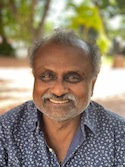
Joseph Fernando, MD is a training and supervising analyst at the Toronto Institute of Psychoanalysis. He has published papers on guilt, narcissism, the character of the exception. His book, The Processes of Defense, won the 2010 Gradiva prize for a book on psychoanalytic theory. His second book, A Psychoanalytic Understanding of Trauma: Post-Traumatic Mental Functioning, the Zero Process, and the Construction of Reality was recently published by Routledge in the IPA ideas and applications series. He is presently at work on a book on the deeper links between trauma, guilt, and the the superego, which attempts to throw some light on issues of cultural transmission and group delusions. He has presented widely on his ideas in North America and abroad.
This event is eligible for Section 1 CME credits (0.5 credits/hour). This event is an accredited group learning activity (section 1) as defined by the Maintenance of Certificate Program of the Royal College of Physicians and Surgeons of Canada, approved by the Canadian Psychiatric Association (CPA). The specific opinions and content of this event are not necessarily those of the CPA, and are the responsibility of the organizer(s) alone. As per the Royal College standard, each presentation provides a minimum of 25% interactive learning.
Refunds must be requested in writing two weeks prior to the beginning of the event, after which fees cannot be returned. A handling fee of $50 will be retained.
For more information about and for registration in the tps&i Extension Programs, Scientific Meetings, Training Programs, Study and Supervision groups and Special Presentations, please visit our website: torontopsychoanalysis.com or email info@torontopsychoanalysis.com.